
The BPS team is the leading authority in oil geochemistry. In addition to utilizing all traditional geochemistry techniques, BPS (in partnership with Biomarker Technologies) has been actively spearheading the ongoing revolution toward Advanced Geochemistry Technology (AGT).
Advanced technologies such as quantitative mass spectrometry (GC-MS-MS), quantitative diamondoid analyses (QDA), compound-specific isotope analyses from biomarkers (CSIA-B), n-alkanes (CSIA-A), diamonoids (CSIA-D), and extended diamondoid analyses (QEDA) are the only tools currently available to identify, characterize, and analyze the distribution of a basin’s source rock using only oil samples.
These technologies are also essential for resolving complex oil mixtures from different organic facies, including non-cracked black oil and highly cracked condensates, in very deep source rock formations. Integrating these methods allows us to determine their origin, depositional environment, organic facies, potential yields, age, thermal maturity, oil cracking, filling histories, and migration pathways, providing better predictions of the depth and volume of a source rock system.
Learn more about AGT!
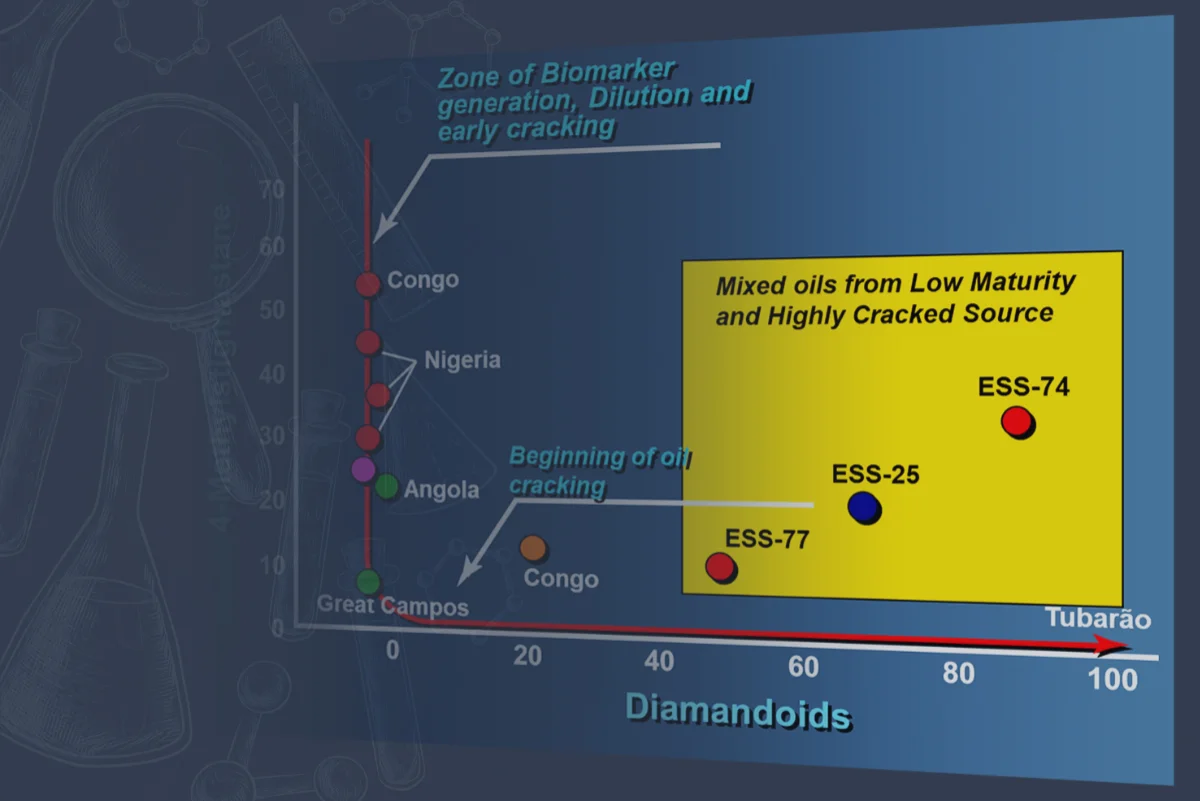
First described by Dahl et al. (1999), this method revolutionized the ability to estimate oil cracking and identify oils derived from more than one source.
Although most oil correlations had previously recognized the oil-window source, usually based on biomarker correlations, it turns out that many, and perhaps most, oils are actually mixtures of oil-window and more mature sources. As such, identifying mixtures and estimates of relative contributions using QDA can drastically change petroleum basin modeling outputs and provide an entirely new view of even the most highly explored basin.
In addition to being a highly effective tool for definitive oil correlations and deconvoluting mixed oil sources, CSIA-B, A, and D also provide fascinating insights into biomarker origins that were previously impossible to access. Most organic geochemists have likely dreamed of determining the isotopic signature of individual biomarkers in oils. Recently, we have solved this challenging problem and isolated biomarkers from nearly any oil containing them, enabling their isotopic signatures to be measured using gas chromatography-isotope ratio mass spectrometry (GC-IRMS). This breakthrough has opened up a new world of biomarker isotopes. Experience has shown that CSIA-B, CSIA-A, and CSIA-D are currently the best technologies for recognizing and distinguishing mixed-source oils from two different source rocks of Oil-Window maturities (sometimes even more mature).
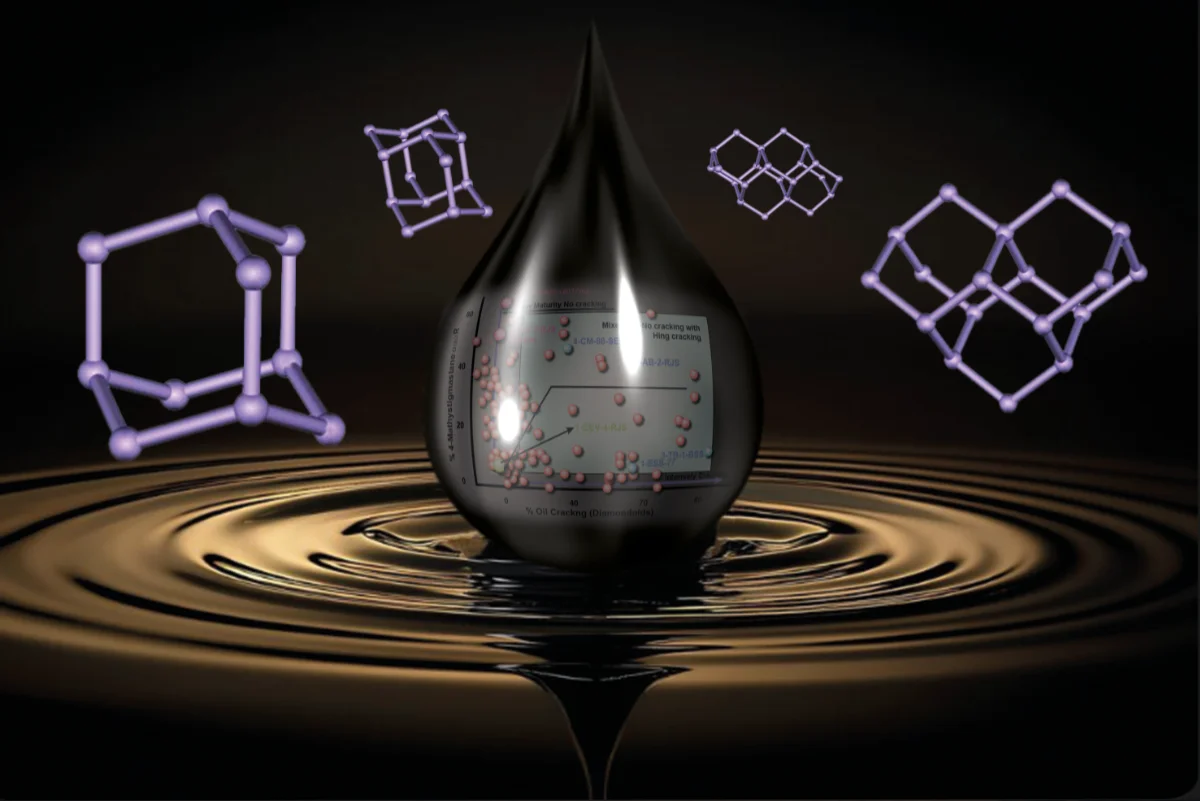
Quantitative Extended Diamondoid Analysis (QEDA) is the only proven method to correlate components in complex oil mixtures of cracked and non-cracked, paleo-biodegraded and non-biodegraded oils and condensates.
QEDA is the only geochemical tool available that is unaffected by variations in oil properties, relating only to organic facies.
Similar to QDA, except that further treatments using proprietary methods are used to concentrate the large diamondoid molecules into measurable and quantified concentrations. The patterns of relative concentrations of these structures can then be measured by using the absolute concentrations of higher diamondoids, such as tetramantanes, pentamantanes, and cyclohexamantanes, in any oil. The data can then be displayed as line graphs or ternary plots that show the relationships among these three structures.